
Homemade Corn Stock from Corn Cobs
Before you toss those bare corn cobs, here’s a very easy way to get one more recipe out of them.
Homemade corn stock is light, a little sweet, and full of fresh corn flavor. It’s the kind of simple kitchen trick that feels almost too good to waste once you know about it.
Just add the cobs to a pot with onion, celery, garlic, herbs, peppercorns, and water. Let everything simmer, then strain it. That’s really all there is to it.
The finished stock is gentler than regular vegetable broth, so it works beautifully in corn chowder, risotto, gravy, stuffing, and creamy sauces.
You can use it right away, keep it in the fridge for a few days, or freeze it for another meal.
Make Easy Creamed Corn with the kernels first, then turn the cobs into stock. Nothing fancy—just a smart way to make that fresh corn go further.
Ingredients You Need
Save those corn cobs—a few kitchen basics turn them into a flavorful homemade stock.

How To Make Corn Stock
1. Save and scrape the cobs.
After cutting off the corn kernels, run the dull back edge of a knife down each cob over a bowl. Add the released corn milk and small bits to the stockpot.
Break or cut the cobs in half so they fit below the water line more easily.
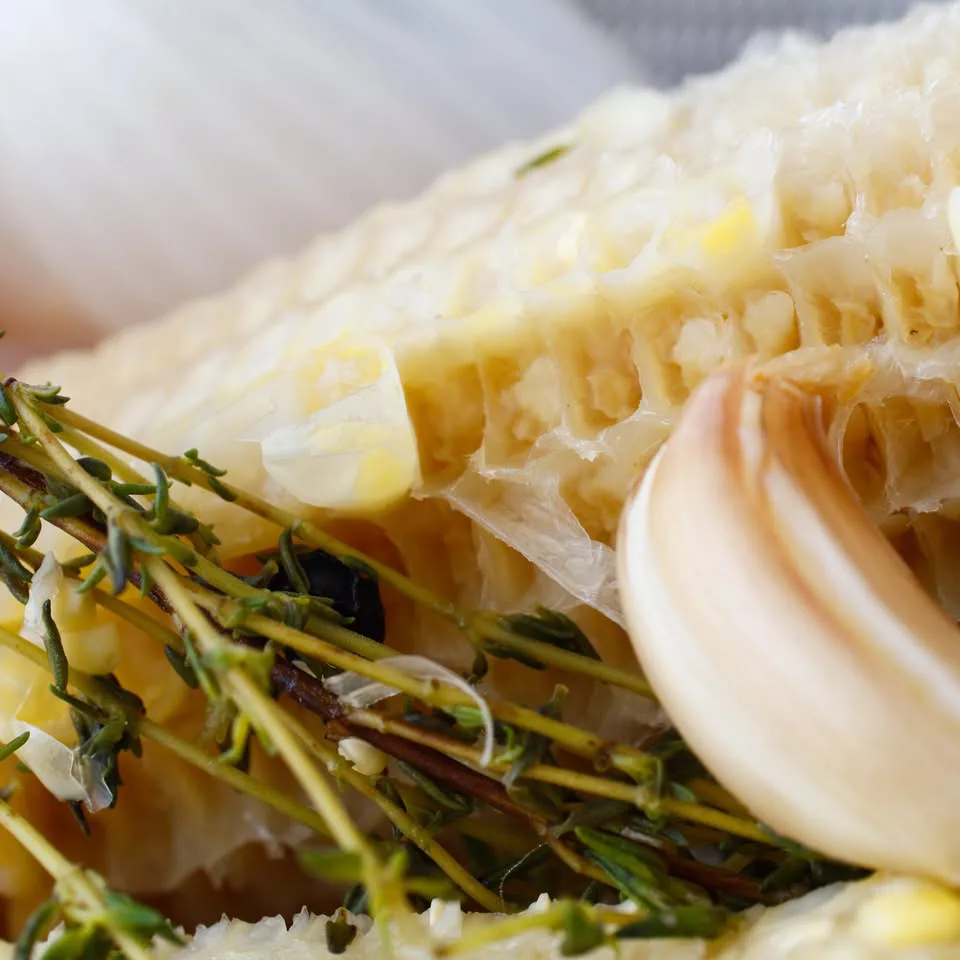

2. Add the aromatics.
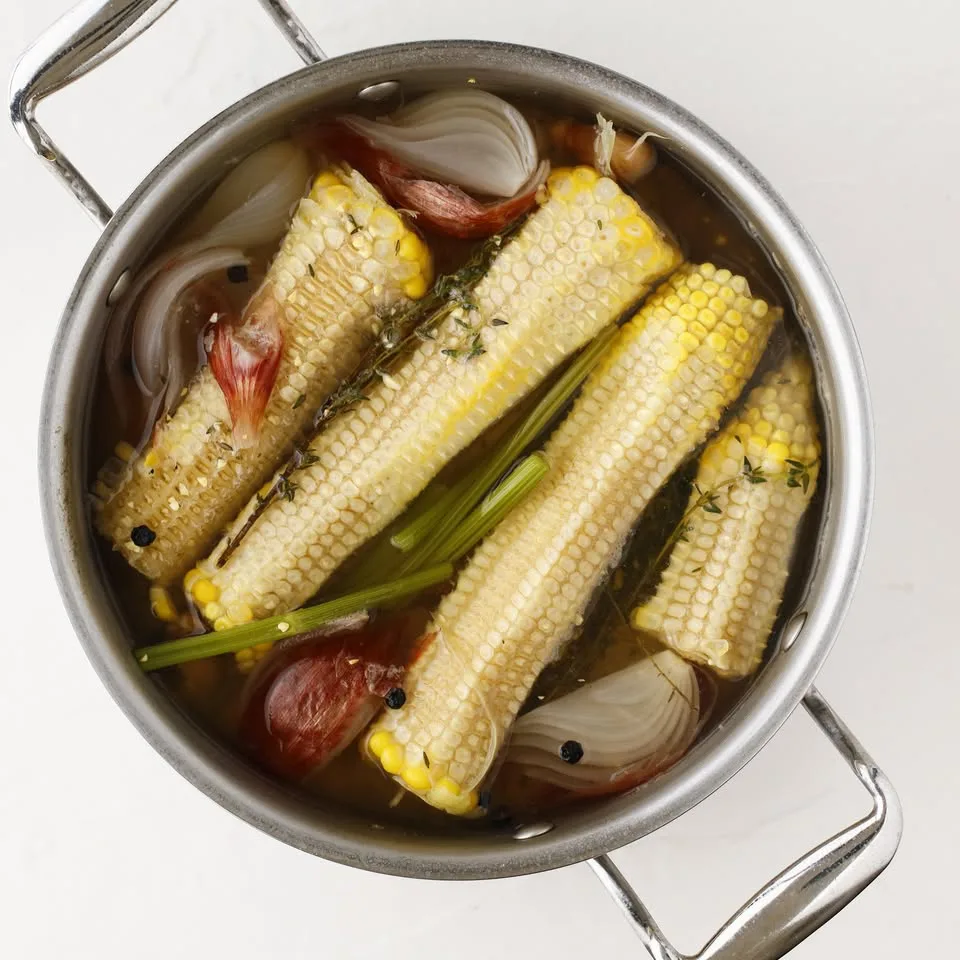
Place the cobs, onion, celery, garlic, thyme, parsley, bay leaf, and peppercorns in a large pot.
Add 8 cups cold water. The ingredients should be mostly submerged; press them down gently if they float.
3. Bring it to a gentle simmer.
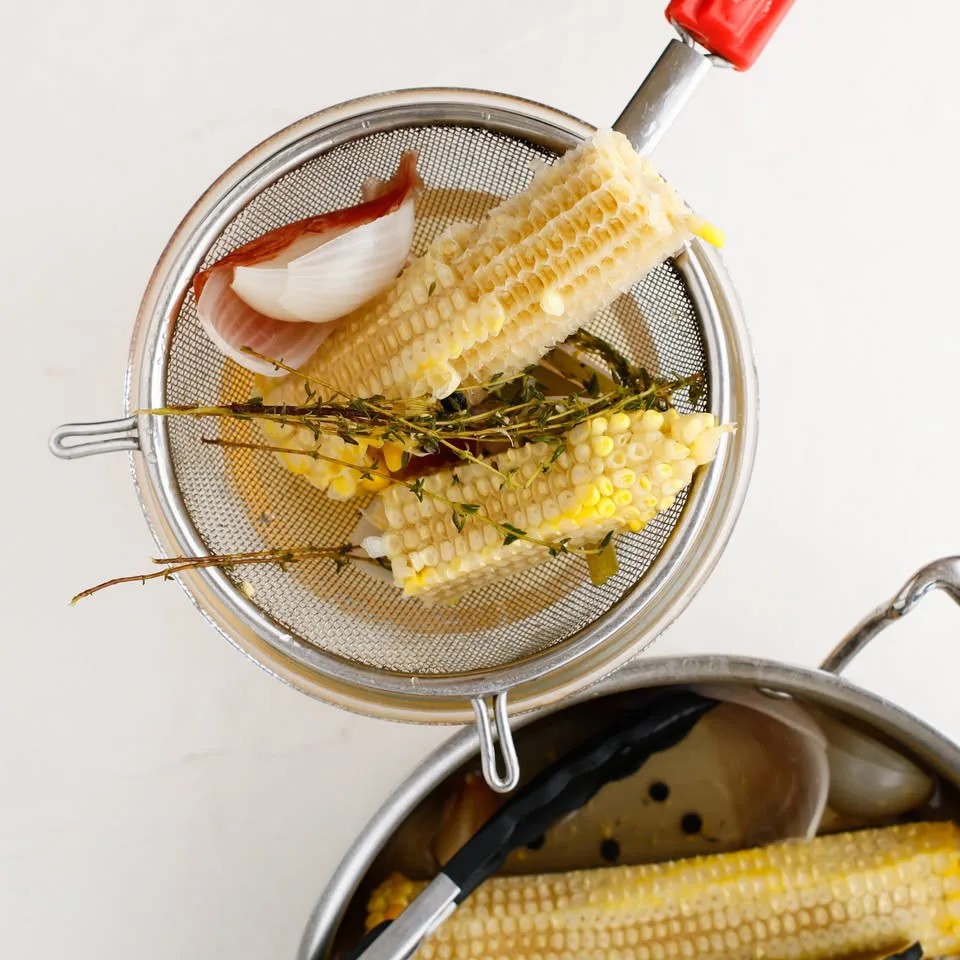
Set the pot over medium-high heat and bring the water just to a boil.
Immediately reduce the heat to maintain a gentle, uncovered simmer. Hard boiling can make the stock cloudy and pushes away liquid faster than the cobs have time to flavor it.
4. Simmer until golden.
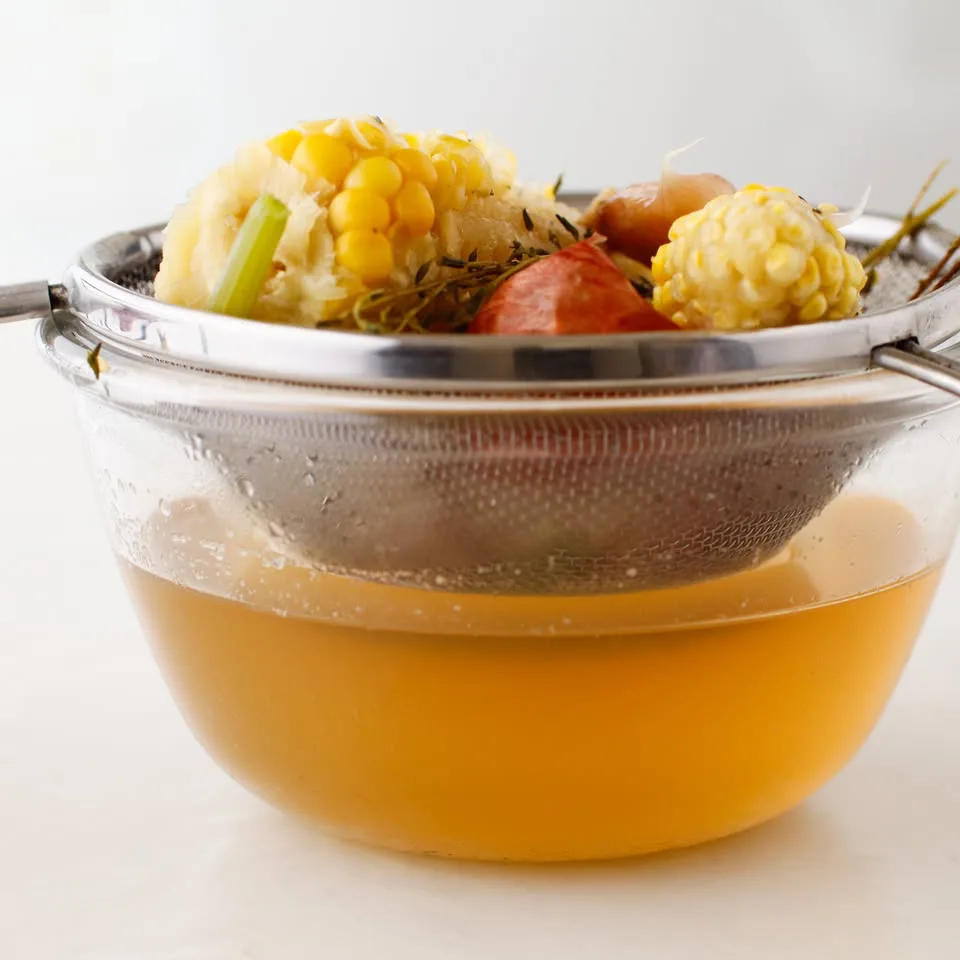
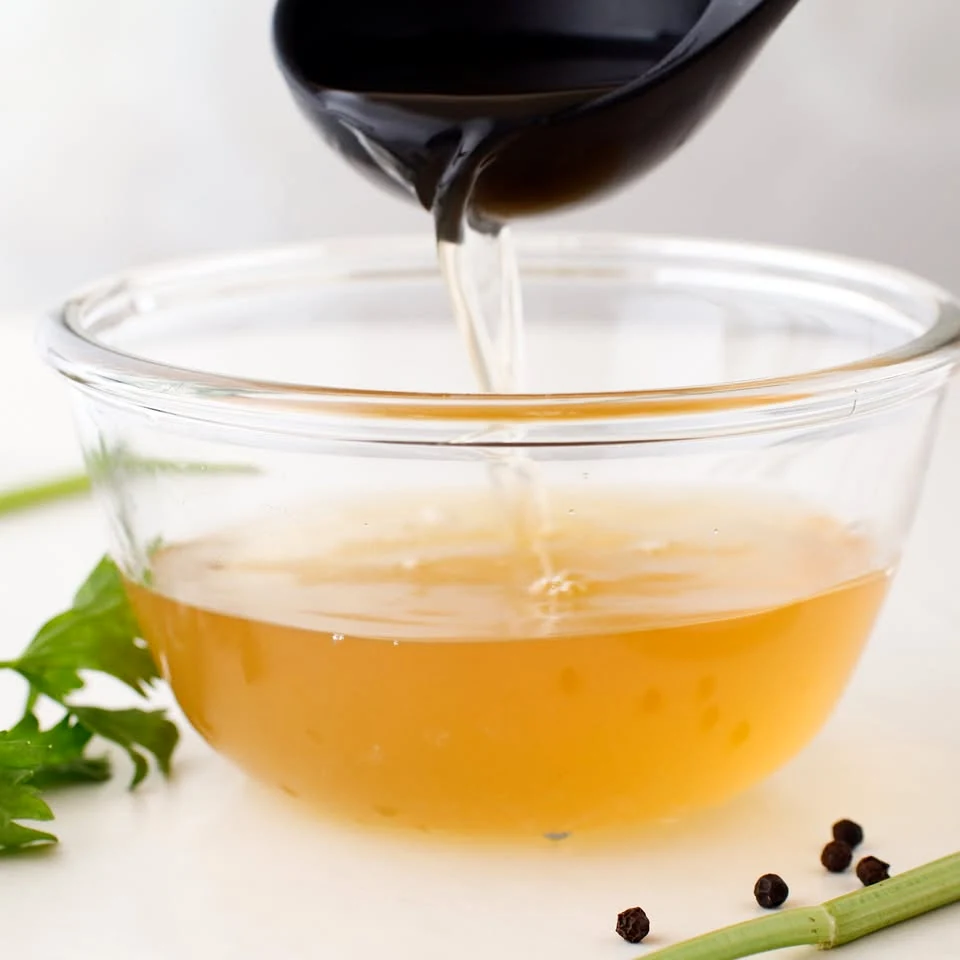
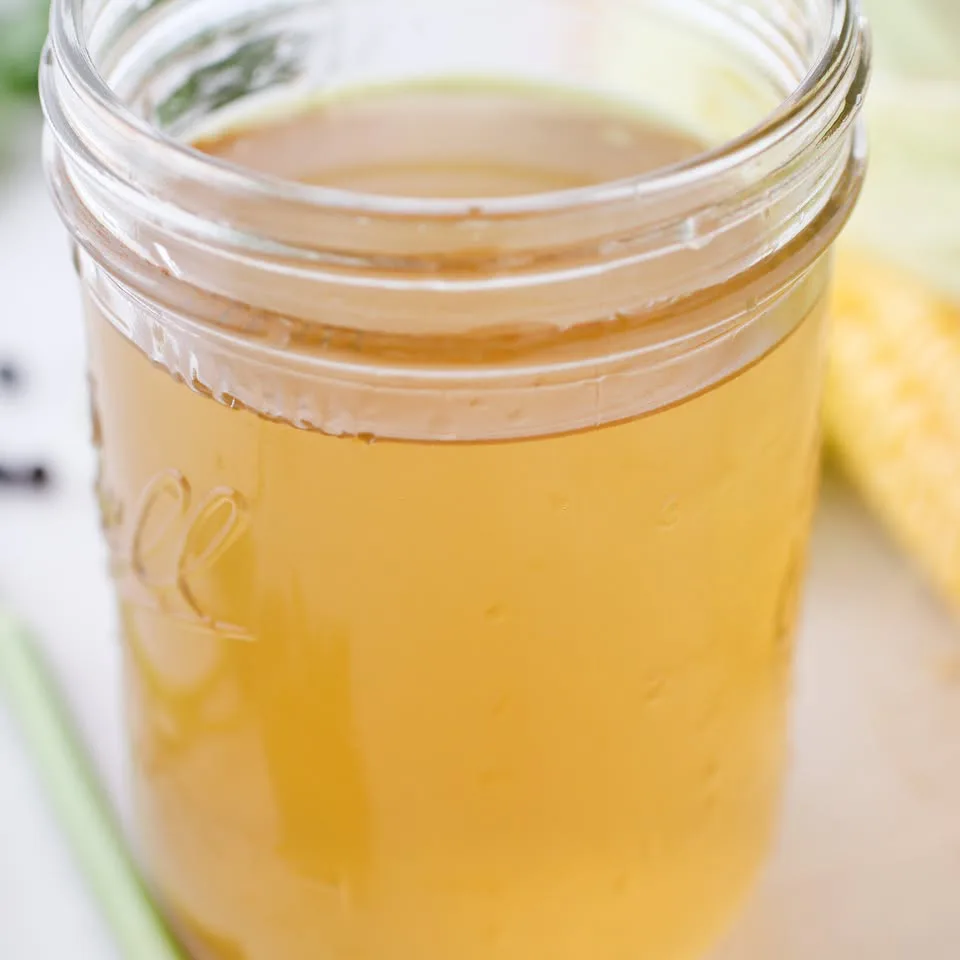
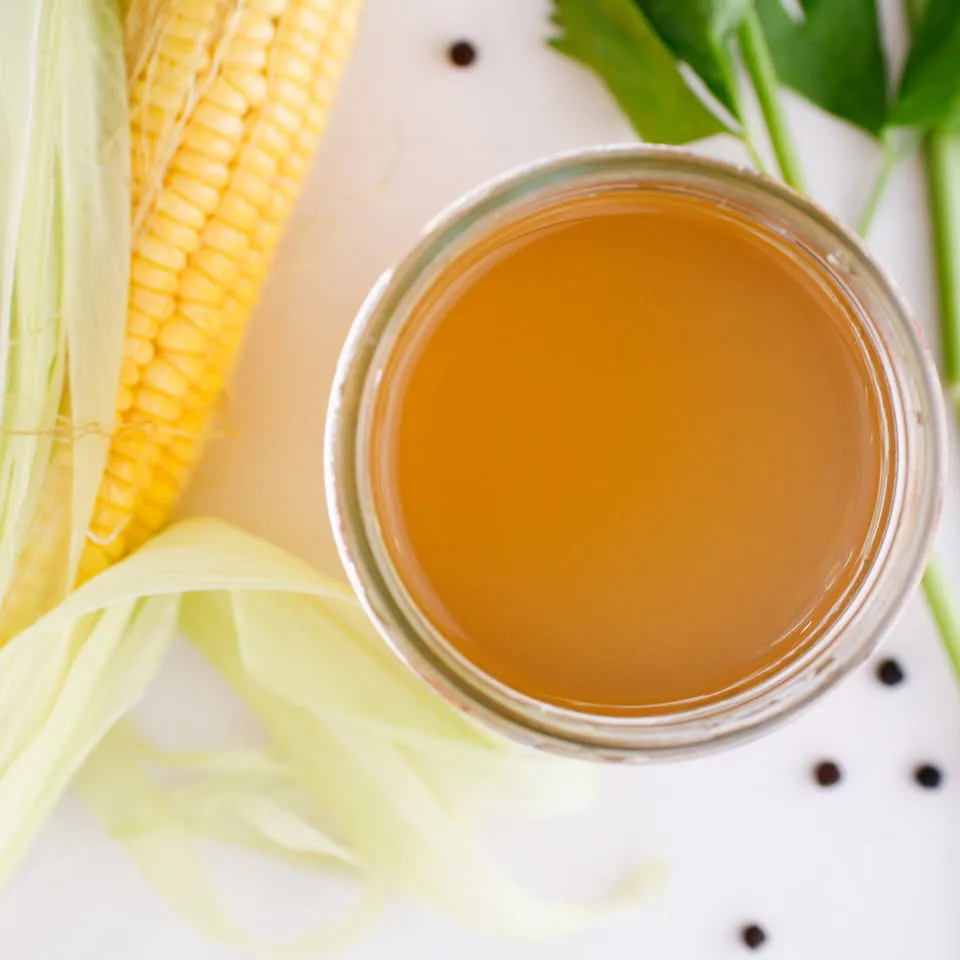
Cook for 40 to 45 minutes, stirring once or twice. The liquid should turn pale gold and smell distinctly of corn and thyme.
Avoid simmering for hours. Vegetable aromatics and stripped cobs give up their useful flavor relatively quickly, and a very long cook can make the stock taste flat or bitter.
5. Strain the stock.
Remove the largest pieces with tongs, then pour the stock through a fine-mesh sieve into a large heatproof bowl.
Let it drain naturally. Pressing hard on the cooked vegetables can push cloudy solids into the finished stock.
6. Season or cool promptly.
Taste the stock. Add up to 1/2 teaspoon salt if you plan to use it as a finished broth, or leave it unsalted when it will become part of another seasoned recipe.
Use it immediately, or divide it into shallow containers so it cools quickly before refrigeration or freezing.
Stock or Broth?
In everyday cooking, the words overlap. This recipe is commonly called corn stock because it is built from the cobs—the structural part left after the kernels are removed.
It does not contain bones or gelatin, so it remains light even after chilling. Use it anywhere you would use a mild vegetable broth when a gentle corn flavor makes sense.
Why Start with Cold Water?
Cold water gives the ingredients time to warm together while their flavor moves into the liquid.
Starting with boiling water is not disastrous, but it encourages the outside of the aromatics to cook quickly before the stock settles into a controlled simmer.
Should Corn Stock Be Salted?
Keep the salt light—or leave it out completely—if the stock is destined for stuffing, risotto, gravy, or soup.
Those recipes reduce and contain their own salt. An unsalted stock gives you more control later, especially when bouillon, cheese, or cured meat is involved.
Ways To Use Corn Stock
- Replace vegetable or chicken broth in corn chowder.
- Use it to moisten Small-Batch Stuffing Without Eggs.
- Cook rice, polenta, or risotto in it.
- Reduce it for a light pan sauce.
- Add it to vegetable soup or creamy potato soup.
- Freeze it in small portions for sauces and gravies.
Can You Use Frozen Corn Cobs?
Yes. Put stripped cobs in a freezer bag and freeze them until you have enough for a batch.
There is no need to thaw them. Add the frozen cobs directly to the pot and allow a few additional minutes for the water to reach a simmer.
Storage and Freezing
Cool the strained stock promptly in shallow containers. Refrigerate it for up to four days.
For longer storage, freeze it in measured containers, freezer bags laid flat, or ice-cube trays. Leave expansion space in rigid containers and label them with the amount and date.
Use frozen corn stock within three months for the best flavor.
Quick Corn Stock Questions
Can I use raw or cooked corn cobs?
Yes. Cobs left from raw kernels give a fresh flavor; cobs from plainly cooked corn also work.
Why is my stock cloudy?
A hard boil or pressing the solids during straining can suspend small particles. Cloudiness does not usually affect its usefulness.
Can I include the husks and silk?
Skip the silk, which is difficult to strain cleanly. Clean inner husks can be added, but the photographed recipe uses stripped cobs and conventional aromatics.
Can I double the recipe?
Yes. Use enough cold water to cover the ingredients and a pot large enough to maintain a gentle simmer without overflowing.

Homemade Corn Stock
Stripped corn cobs simmer with onion, celery, garlic, herbs, and peppercorns to make a light golden stock for soups, stuffing, grains, and sauces.
- Total Time55 minutes
- YieldAbout 6 cups 1x
Ingredients
- 5 corn cobs, kernels removed
- 1 small red or yellow onion, quartered
- 2 celery stalks, cut into large pieces
- 2 garlic cloves, lightly crushed
- 6 sprigs fresh thyme
- 6 parsley stems with leaves
- 1 bay leaf
- 1 teaspoon whole black peppercorns
- 8 cups cold water
- 1/2 teaspoon kosher salt, optional
Instructions
- Scrape the stripped cobs with the back of a knife and add the corn milk and bits to a large stockpot. Break the cobs in half.
- Add the onion, celery, garlic, thyme, parsley, bay leaf, peppercorns, and cold water.
- Bring just to a boil over medium-high heat, then immediately reduce to a gentle uncovered simmer.
- Simmer for 40 to 45 minutes, until pale gold and fragrant.
- Remove the large pieces and strain through a fine-mesh sieve without pressing hard on the solids.
- Season lightly if desired. Use immediately or cool promptly in shallow containers before storing.
Notes
- Leave the stock unsalted when using it in a recipe that will reduce or contains salty ingredients.
- Frozen stripped cobs can go directly into the pot.
- Refrigerate for up to four days or freeze for up to three months for best flavor.
- Prep Time: 10 minutes
- Cook Time: 45 minutes
