Small-Batch Stuffing Without Eggs
Cooking Thanksgiving dinner for a smaller group? This stuffing gives you a proper holiday side without filling your fridge with a huge casserole dish afterward.
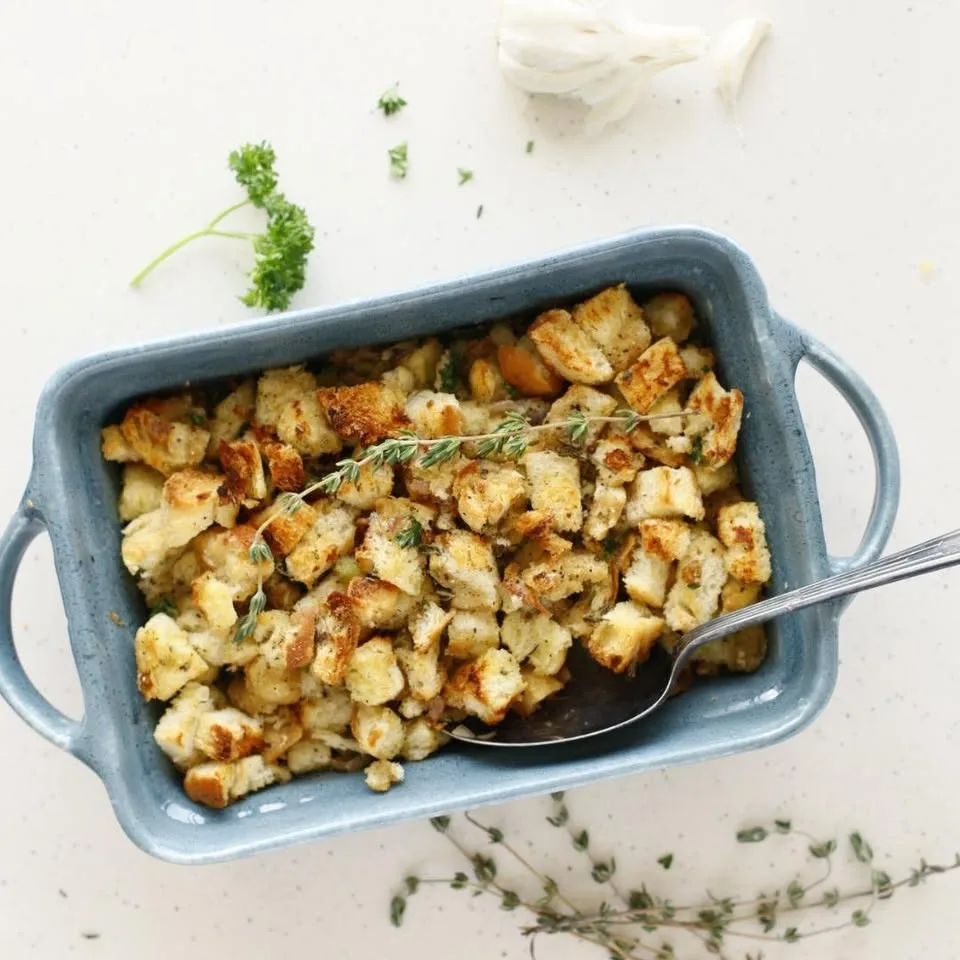
It’s buttery, herby, and packed with tender celery and red onion. The top gets wonderfully crisp, while the bread underneath stays moist from the broth.
There are no eggs in this recipe. That means the stuffing stays a little looser, with plenty of craggy edges instead of baking into one firm block.
It makes about six servings, which is just right for a small Thanksgiving dinner or an easy roast-chicken supper.
You can dry the bread and chop the vegetables ahead of time. When you’re ready to cook, mix everything together and pop it straight into the oven.
If you need a larger, softer pan of stuffing, try our Easy Bread Stuffing. For a smaller batch with extra crispy edges, stay right here.
Ingredients You Need
The ingredient list is short, simple, and just right for a smaller batch of stuffing.

How To Make Stuffing Without Eggs
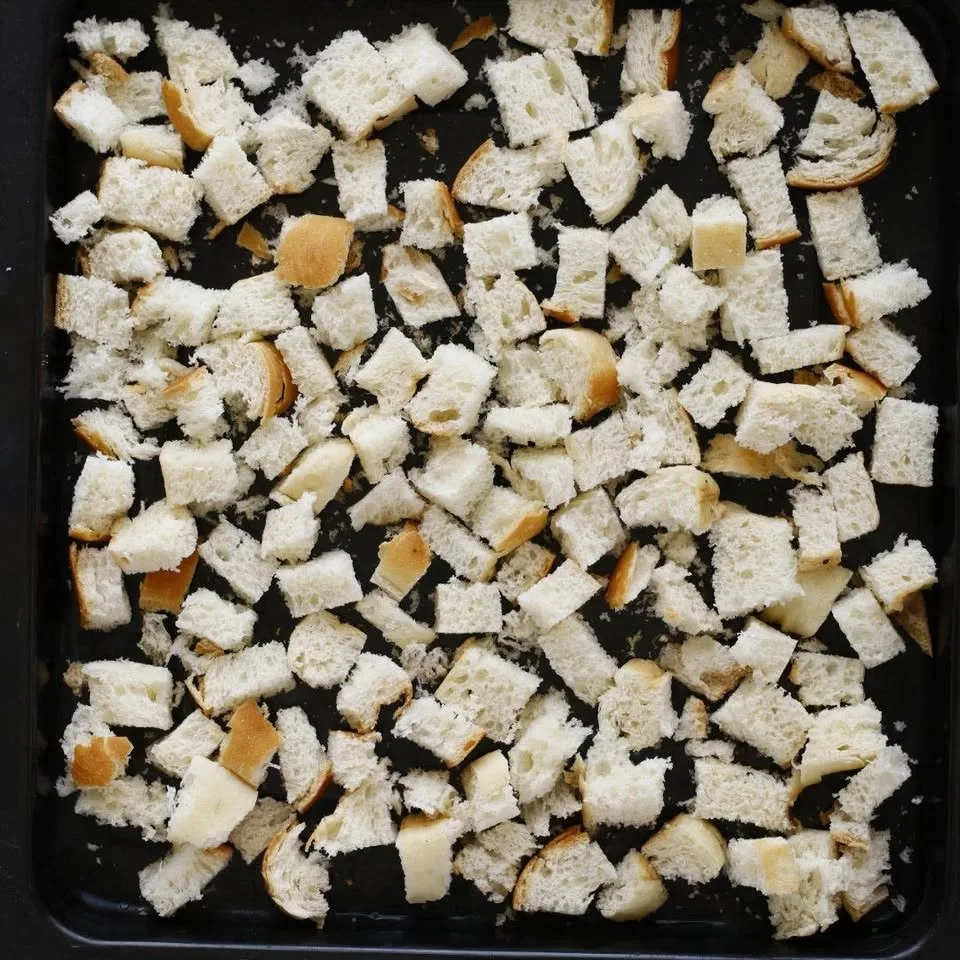
1. Dry the bread cubes.
Spread the bread cubes over a large rimmed baking sheet and leave them uncovered overnight.
For a same-day method, heat the oven to 300°F and bake the cubes for 25 to 35 minutes, stirring once or twice, until dry with very little color. Let them cool before assembling the stuffing.
Dry bread absorbs the broth and butter without collapsing. Fresh, soft cubes are more likely to turn gummy around the bottom of the dish.
2. Prepare the baking dish.
Heat the oven to 350°F. Grease a 2-quart casserole dish or 10-inch cast-iron skillet with 1 tablespoon of the butter.
Put the dried bread cubes in a large mixing bowl and set them aside while you cook the vegetables.
3. Soften the aromatics.
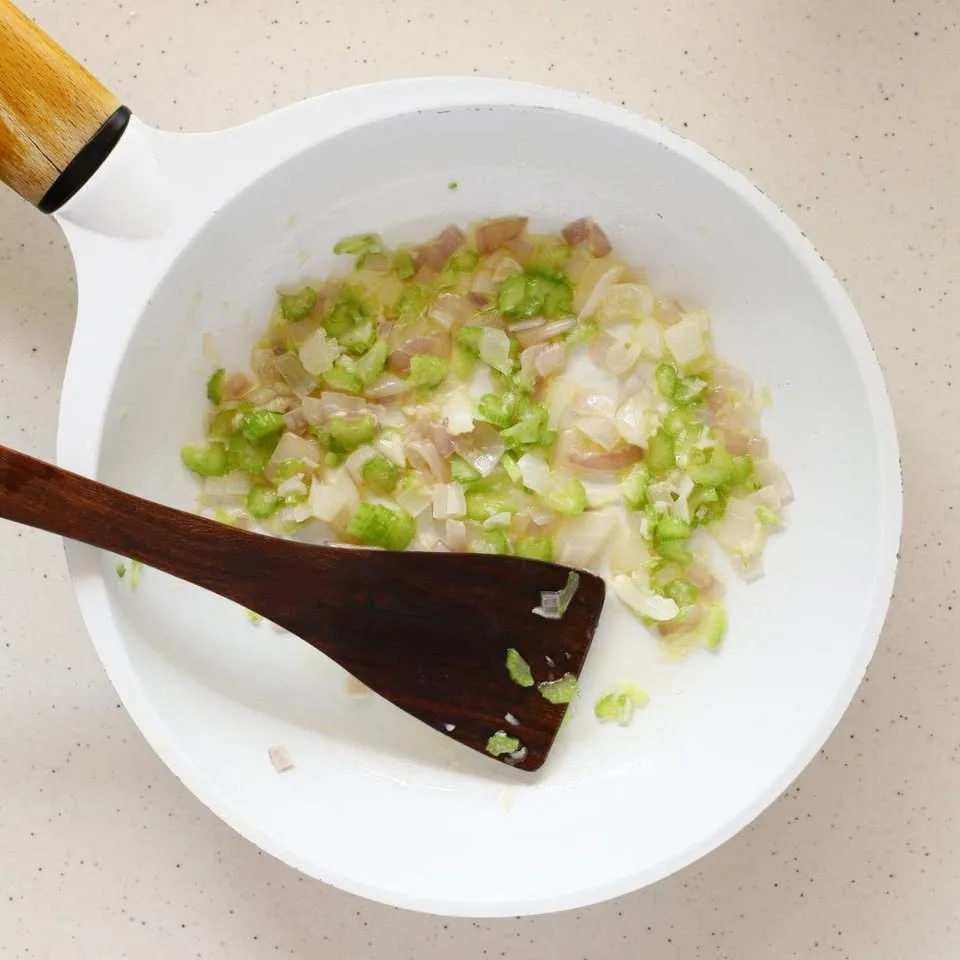
Melt the remaining 4 tablespoons butter in a large skillet over medium heat.
Add the red onion and celery. Cook for 6 to 8 minutes, stirring occasionally, until the vegetables are tender but not deeply browned.
Add the garlic and cook for 30 seconds, just until fragrant.
4. Add the herbs and broth.
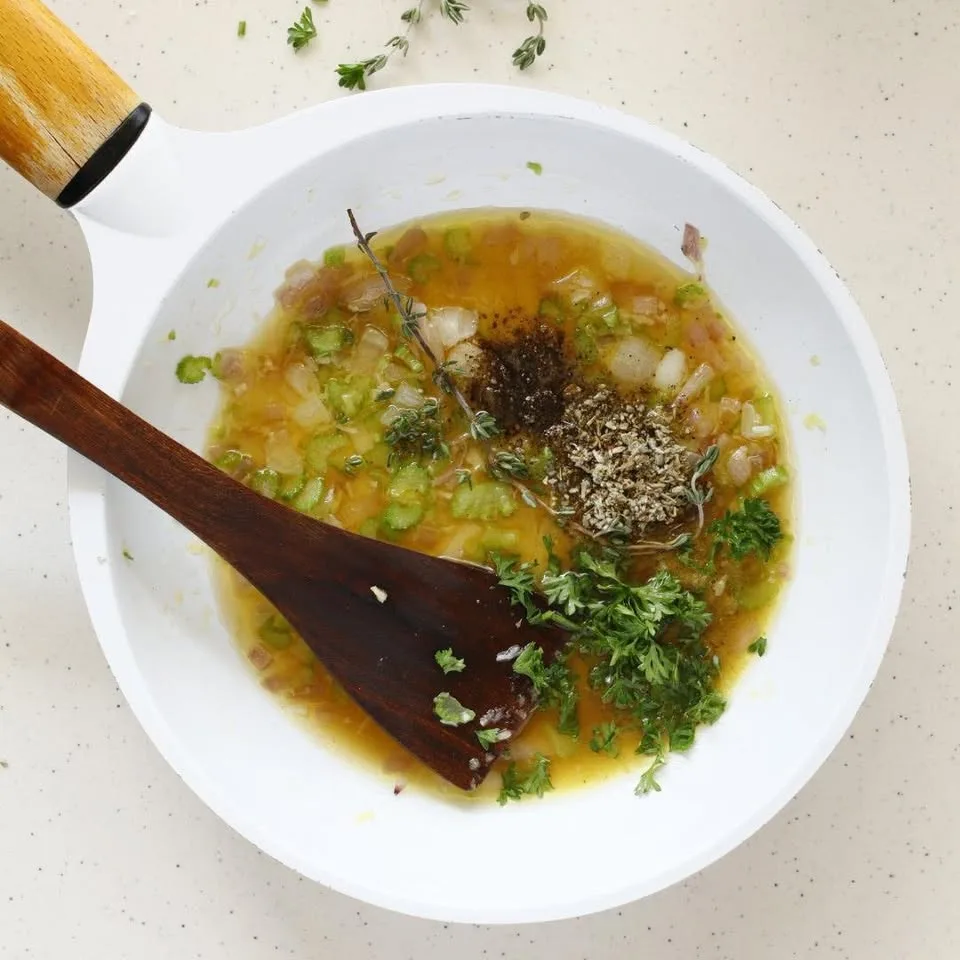
Stir the sage, oregano, thyme, salt, pepper, and parsley into the skillet.
Pour in 1 3/4 cups of the warm broth and stir, scraping up any flavorful bits from the bottom. Let the mixture come to a gentle simmer, then remove the pan from the heat.
5. Moisten the bread.
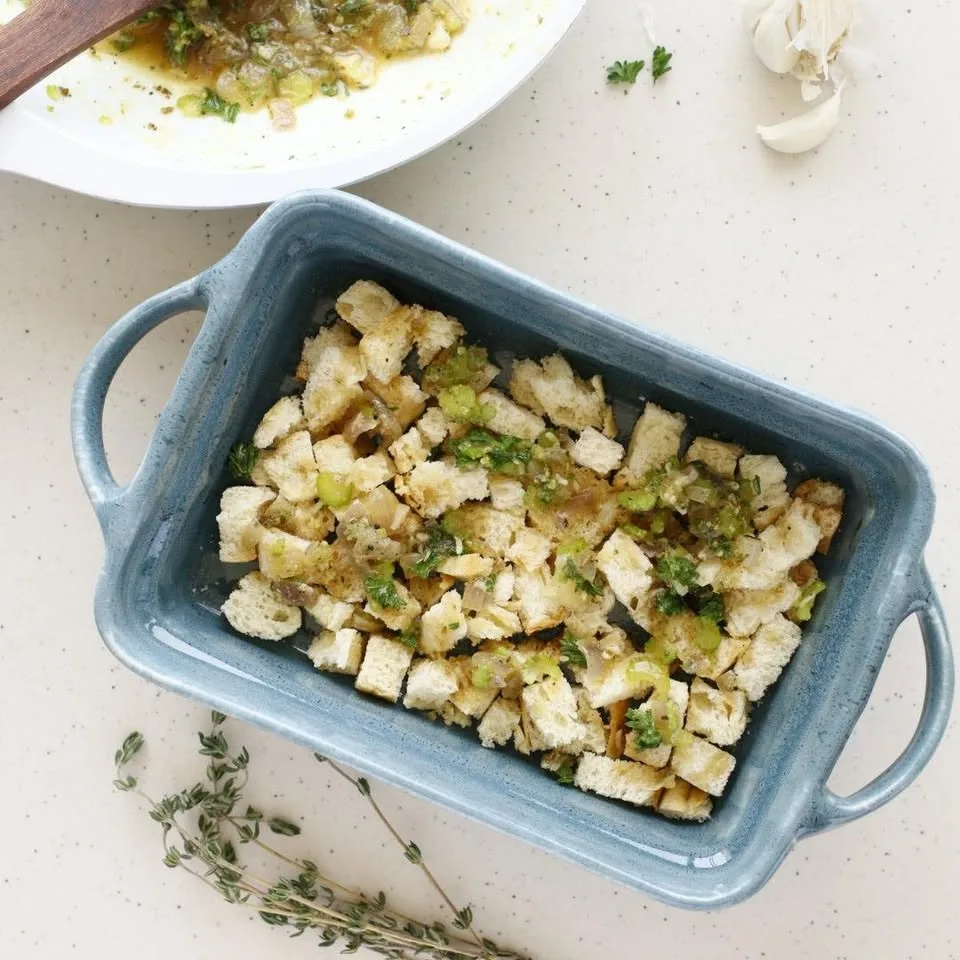
Pour the broth and vegetable mixture over the bread cubes. Fold gently until the liquid is distributed from the top of the bowl to the bottom.
Let the mixture stand for 2 minutes, then squeeze one cube lightly. It should be moist through the center but should not release liquid.
If several cubes still feel dry, add the remaining broth a few tablespoons at a time. Different breads absorb different amounts, so the final quarter-cup is a texture adjustment rather than a requirement.
6. Fill the dish loosely.
Transfer the stuffing to the prepared casserole or skillet. Spread it into an even layer without pressing it down.
A loose surface leaves small gaps for hot air to move through and gives more of the bread a chance to brown.
7. Bake until crisp and hot.
Bake uncovered for 30 to 35 minutes, until the top is golden and the center reaches 165°F.
If you prefer a softer top, cover the dish loosely with foil for the first 15 minutes, then uncover it for the remaining bake.
Rest the stuffing for 5 to 10 minutes and finish with extra parsley or thyme before serving.
Why This Stuffing Works Without Eggs
Eggs help bind a soft bread stuffing into scoopable portions, but they are not necessary for flavor or moisture.
In this version, the dried bread absorbs warm broth and melted butter. The cubes soften where they touch while the exposed surfaces remain distinct and crisp.
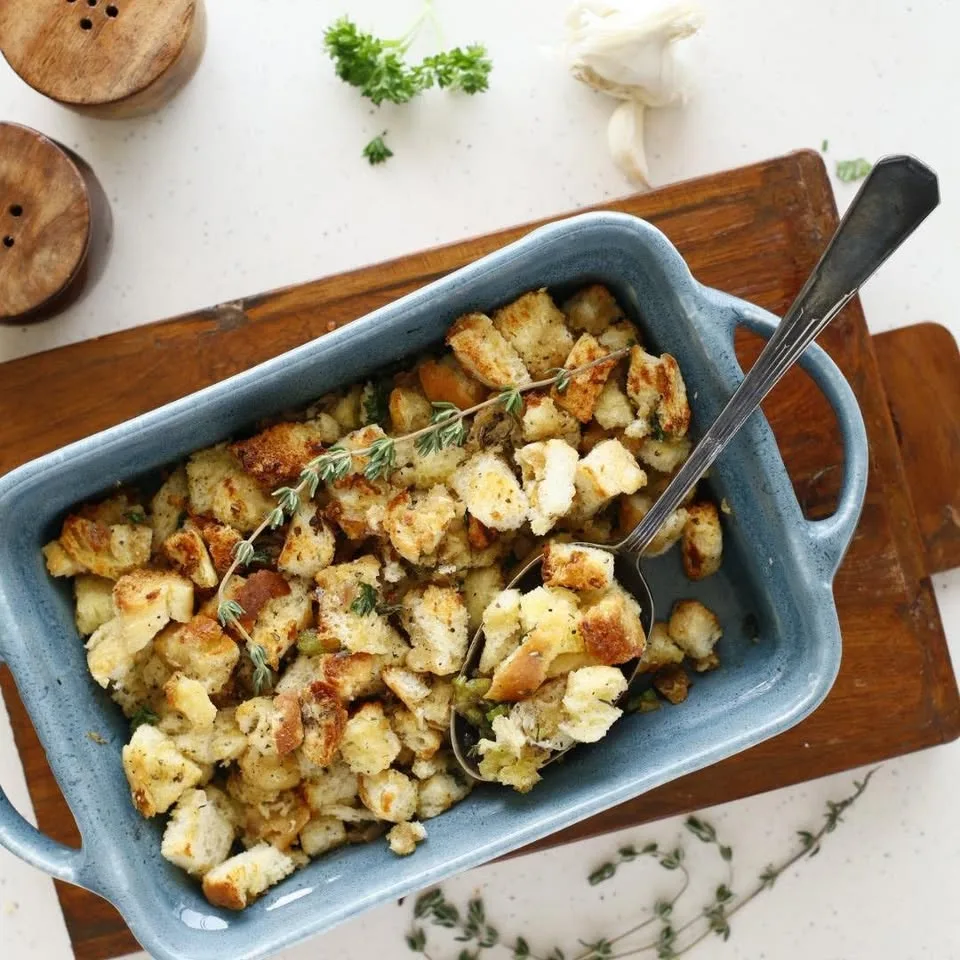
The finished stuffing is intentionally looser than an egg-bound casserole. It should lift easily with a serving spoon rather than cut into firm squares.
How Much Broth Should You Add?
Start with 1 3/4 cups and give the bread a couple of minutes to absorb it before adding more.
Soft sandwich bread may stop there. A dense country loaf dried overnight may need the full 2 cups.
The best check is inside a cube. It should feel moist when pressed, but there should be no puddle at the bottom of the bowl.
Casserole Dish or Cast-Iron Skillet?
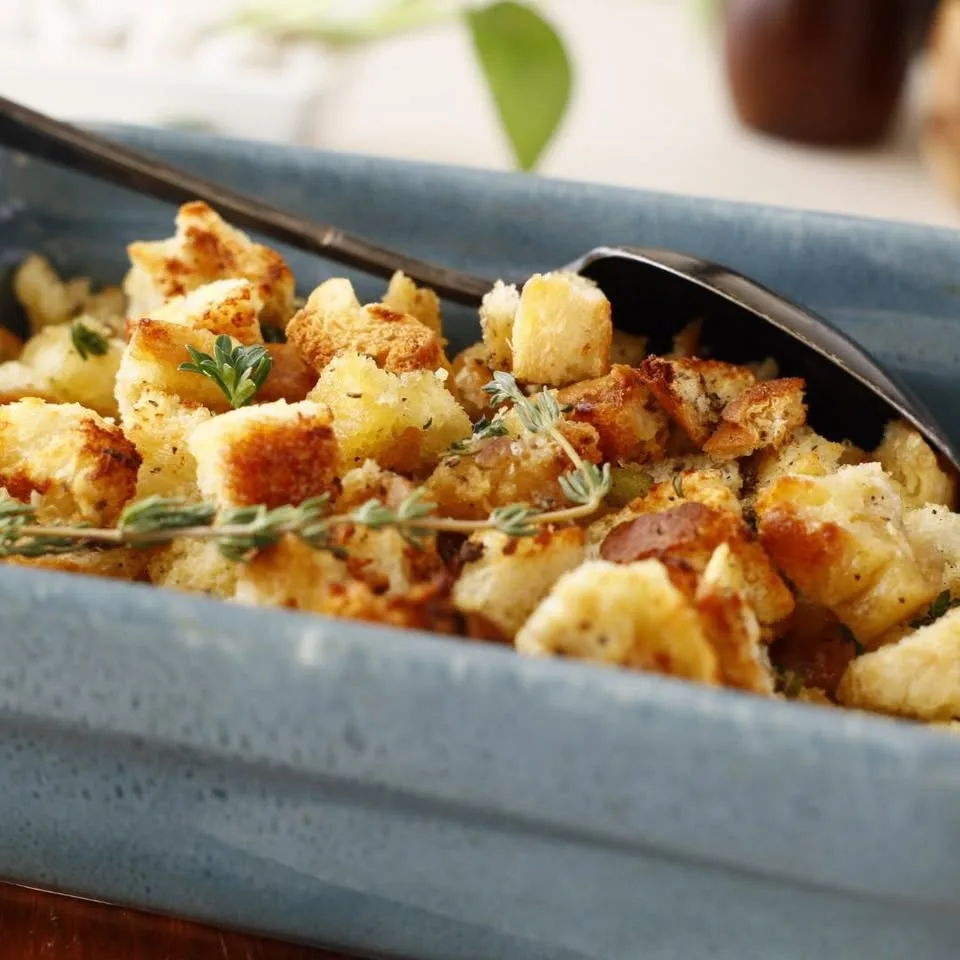
Both work, and the photographs for this recipe support both options.
A small casserole dish gives the stuffing a slightly deeper, softer center. A 10-inch cast-iron skillet heats the edges quickly and creates more browned pieces around the outside.
Use the same oven temperature and begin checking either version at 30 minutes.
Make-Ahead Instructions
Dry the bread up to three days ahead and store it in an airtight container after it has cooled completely.
The onion and celery can also be cooked one day ahead and refrigerated separately.
For food safety, do not refrigerate the fully combined uncooked stuffing. Assemble it immediately before baking, or assemble it in a freezer-safe shallow dish and freeze it right away. Bake frozen stuffing without thawing until its center reaches 165°F.
Easy Variations
Use yellow onion: Replace the red onion with a small yellow or sweet onion for a milder color and flavor.
Add mushrooms: Cook 4 ounces chopped mushrooms with the onion and celery until their moisture evaporates.
Use poultry seasoning: Replace the sage and oregano with 2 teaspoons poultry seasoning.
Make it vegetarian: Use vegetable broth and confirm that any bouillon or packaged broth is vegetarian.
Add a softer center: Cover the dish for the first half of baking, then uncover it so the top can brown.
What To Serve with Small-Batch Stuffing
This stuffing fits beside roast turkey, chicken, pork tenderloin, or honey-glazed ham.
For a smaller Thanksgiving menu, add Easy Creamed Corn or Creamy Scalloped Potatoes, then finish with Skillet Apple Crisp.
Storage and Reheating
Move leftovers into a shallow covered container and refrigerate them within two hours. Use them within three to four days.
Reheat stuffing in a 325°F or hotter oven, or in the microwave, until the center reaches 165°F. Add a small splash of broth before covering if the bread looks dry.
Quick Stuffing Questions
Can stuffing really be made without eggs?
Yes. It will be looser and less custardy than egg-bound stuffing, but dried bread and broth still create a moist center with crisp edges.
Why is my stuffing dry?
The bread may have needed more broth, or the stuffing may have baked too long. Add broth gradually before baking and begin checking at 30 minutes.
Why is my stuffing soggy?
Too much broth, very fresh bread, or packing the mixture tightly can trap excess moisture. Dry the cubes first and keep the mixture loose in the dish.
Can I double this recipe?
Yes. Double the ingredients and use a greased 9-by-13-inch dish. The deeper mixture may need to be covered for part of the bake and may require additional time to reach 165°F in the center.
Small-Batch Stuffing Without Eggs
A six-serving bread stuffing with celery, red onion, garlic, broth, and herbs. It bakes uncovered for a loose, savory center and crisp golden edges.
- Total Time1 hour 5 minutes
- Yield6 servings 1x
Ingredients
- 8 cups 1-inch cubes from firm white or country bread, about 12 ounces
- 5 tablespoons unsalted butter, divided
- 1 small red onion, diced
- 2 celery stalks, diced
- 2 garlic cloves, minced
- 1 teaspoon dried rubbed sage
- 1 teaspoon dried oregano
- 1 teaspoon fresh thyme leaves
- 1/2 teaspoon kosher salt, plus more to taste
- 1/2 teaspoon freshly ground black pepper
- 1 3/4 to 2 cups low-sodium chicken or vegetable broth, warmed
- 1/4 cup chopped fresh parsley, plus more for serving
Instructions
- Dry the bread cubes uncovered overnight, or bake them at 300°F for 25 to 35 minutes until dry but barely colored. Cool.
- Heat the oven to 350°F. Grease a 2-quart casserole or 10-inch cast-iron skillet with 1 tablespoon butter. Put the bread in a large bowl.
- Melt the remaining 4 tablespoons butter in a large skillet over medium heat. Cook the onion and celery for 6 to 8 minutes until tender.
- Add the garlic and cook for 30 seconds. Stir in the sage, oregano, thyme, salt, pepper, and parsley.
- Add 1 3/4 cups warm broth and bring it to a gentle simmer. Remove the skillet from the heat.
- Pour the broth mixture over the bread and fold gently. Rest for 2 minutes, then add the remaining broth gradually only if the cubes are still dry inside.
- Spread the stuffing loosely in the prepared dish. Bake uncovered for 30 to 35 minutes, until golden and 165°F in the center.
- Rest for 5 to 10 minutes and garnish with extra parsley or thyme before serving.
Notes
- The stuffing is intentionally looser than an egg-bound version.
- Bread type and dryness determine whether the full 2 cups of broth are needed.
- For a softer top, cover the dish for the first 15 minutes and finish uncovered.
- Do not refrigerate fully assembled uncooked stuffing. Cook it immediately or freeze it immediately.
- Refrigerate cooked leftovers within two hours and use them within three to four days.
- Prep Time: 20 minutes
- Cook Time: 35 minutes
